Early Signs Of Speech Delay in Children: When to Seek Professional Assessment
Book Appointment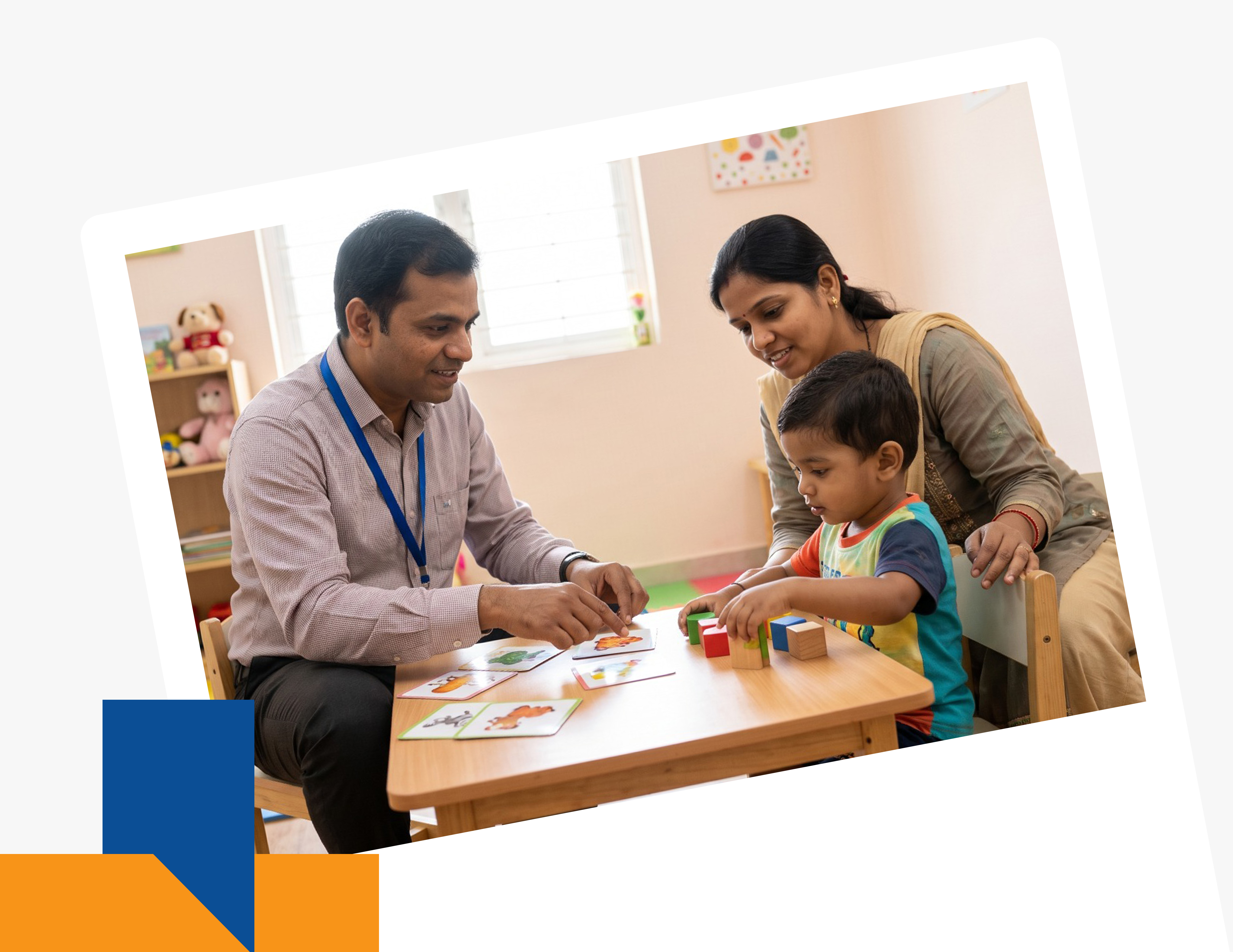
Every child learns at their own pace. Still, doctors use general milestones to understand whether development is on track. These are guides, not strict rules.
| Age | What Is Usually Seen |
|---|---|
| 6 months | Cooing, laughing, and making playful sounds |
| 9 to 12 months | Babbling such as "ba-ba" or "ma-ma", waving and responding to their name |
| 12 to 15 months | First meaningful words and simple gestures such as pointing |
| 18 months | A small set of words, often around 10 or more, and understanding simple instructions |
| 2 years | Around 50 words and the start of two-word phrases, such as "more milk" |
| 3 years | Short sentences, with speech that familiar people can mostly understand |
If a child is behind these milestones, it does not always mean something is wrong. It does mean the child is worth watching closely.
Speech delay means a child is learning to speak later than expected for their age. It is different from language delay, although the two often appear together.
A child may have clear sounds but few words. Another may understand everything but struggle to say words clearly. A professional assessment helps to identify which area needs support.
Early signs can be quiet and easy to miss. Doctors and therapists often look out for the following:
Any loss of speech or social skills needs prompt medical attention.
There is rarely one single reason. The most common causes of speech delay in children include:
In some children, it is hard to find a simple and clear cause for speech delay. They are simply "late talkers", and many catch up with encouragement. Because it is hard to tell which children will catch up on their own, a check-up is the safest path.
Doctors generally advise an assessment if any of these apply:
A parent's instinct deserves respect. If worry persists, seeking advice is never an overreaction.
An assessment is usually gentle and play-based. Children rarely feel they are being tested.
Parents are a child’s first and most important teachers. Daily conversations, stories from picture books, and rhymes all contribute to vocabulary development in children. Give the child enough time to reply, speak the words clearly, and provide some extra information too, such as, "Yes, a large red ball". Avoid passive television viewing time and applaud every effort at communication. Pressuring or correcting constantly is likely to create fear in a child and prevent them from speaking up.
Hearing that a child may have a speech delay can feel upsetting. Speech delay is common; it is not caused by anything a parent did wrong, and it is very often treatable. Every child finds their voice in their own time. Even so, early signs of speech delay in children should never be ignored. A timely assessment brings answers, clears confusion, and opens the door to the right support.
At Neotia Bhagirathi Woman and Child Care Centre, New Town, families can find caring guidance for a child’s growth and development. Dr. Sujon Ghosh, MASLP (WBUHS), a specialist in audiology, speech, and swallow therapy (RCI CRR A53190), helps children with speech and hearing concerns through careful assessment and therapy. A consultation is a gentle, practical way to begin, and no parent has to face these questions alone.
Every child learns at their own pace, but doctors use general milestones as a guide. Most babies coo and laugh by 6 months and babble by 9 to 12 months. First meaningful words usually appear between 12 and 15 months. By 2 years, a child often has around 50 words and starts using two-word phrases. By 3 years, short sentences are common, and familiar people can mostly understand the child.
In babies and toddlers, signs include little or no babbling by about 12 months, no pointing or waving by 12 to 15 months, and few or no words by 18 months. A child may also not respond to their name or understand simple instructions. In children aged 2 to 4 years, signs include fewer than 50 words by age 2, speech that is hard for family to understand by age 3, and frustration over trouble expressing needs. Any loss of speech or social skills needs prompt medical attention.
There is rarely one single reason. Common causes include hearing problems, oral-motor difficulties, and premature birth or birth complications. Developmental conditions, neurological conditions, and family history can also play a part, as can limited conversation at home. In some children, no clear cause is found, and they are simply late talkers.
Doctors generally advise an assessment if a child has no babbling or gestures by 12 months, no single words by 16 months, or no two-word phrases by 24 months. Very unclear speech at age 3, a suspected hearing problem, and limited eye contact are also reasons to seek advice. Any loss of previously gained words or skills needs prompt attention. A parent’s instinct deserves respect, so seeking advice is never an overreaction.
An assessment is usually gentle and play-based, so children rarely feel they are being tested. The doctor or therapist first asks about birth history, health, and how the child communicates at home. A hearing check often follows, since hearing affects speech. The team then observes the child at play, and a paediatrician may review overall development. The family finishes with a clear plan, which may include therapy.